
Create an identity. Be intentional, but not rigid

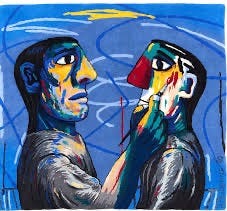
“No man ever steps in the same river twice, for it’s not the same river and he’s not the same man” – Heraclitus
The “self” is not a static concept. It is a dynamic idea, that requires continuous engagement with one’s values, ambitions, vulnerabilities and the social context within which these attributes manifest. As the songstress Nina Simone put it “you have to constantly re-identify yourself to yourself; re-evaluate your own standards; your own convictions about what you’re doing and why”. Socrates expressed a similar sentiment when he said “an unexamined life is not worth living”.
However, self-awareness can also be harnessed negatively. “Over-self-awareness” or a hyper fixation on constantly trying to be a better person can be misleading since humans are prone to blind spots, and our views, even of ourselves, are informed by our own biases and idiosyncrasies. A person should therefore be conscious of what they are choosing through their awareness. It is also for this reason that the pursuit for or towards the self (depending on your philosophical inclinations) should not be a solitary expedition. The “self” by necessary implication requires an idea of “others”, and in this sense our relationships reveal perhaps the most intimate dimension of self understanding. To borrow an idea from Joshua Rothman in his 2024 article in the New Yorker titled “Does Anyone Really Know You?” ,the true “self”, is an arrival, in collaboration with people we spend most of our time with, at a conception of ourselves that we recognise.
But mere “knowing” is not enough, and means nothing without “doing”.
Subscribers of deterministic schools of thought believe that essence precedes existence. That our views, values and purpose had been established at the formation of the cosmos, and that we are merely acting out the greatest screenplay – our roles, costumes and dialogue picked out for us. They find resonance with the quote attributed to Michael Angelo that “The sculpture is already complete within the marble block, before I start my work. It is already there, I just have to chisel away the superfluous material.” It conveys the idea that people can “find” or “discover” themselves, which already exists somewhere within their being. I find this rather boring. I prefer to believe that we create ourselves, we create meaning, and we create purpose. That “to be” is a verb. While the Great Architect of the Universe has drawn up the plans – a general framework, he has left enough aspects of its execution to be creatively determined and pursued by us, the builders. I believe that in this respect you have to take action, within yourself; in your life; and in the world. You have to actively participate in your creation and the creation of the world.
As cultural anthropologist, Ernest Becker put it “beyond a given point man is not helped by more “knowing”, but only by doing and living in a self-forgetful way”. Polymath, Johann Wolfgang von Goethe opined similarly that “we must plunge into experience and then reflect on the meaning of it. All reflection and no plunging drives us mad; all plunging and no reflection and we are brutes”.
What’s the upshot? Create an identity. Be intentional, but not rigid. Be guided by your values. Continue to explore and push the boundaries of what you think you necessarily have to be.